

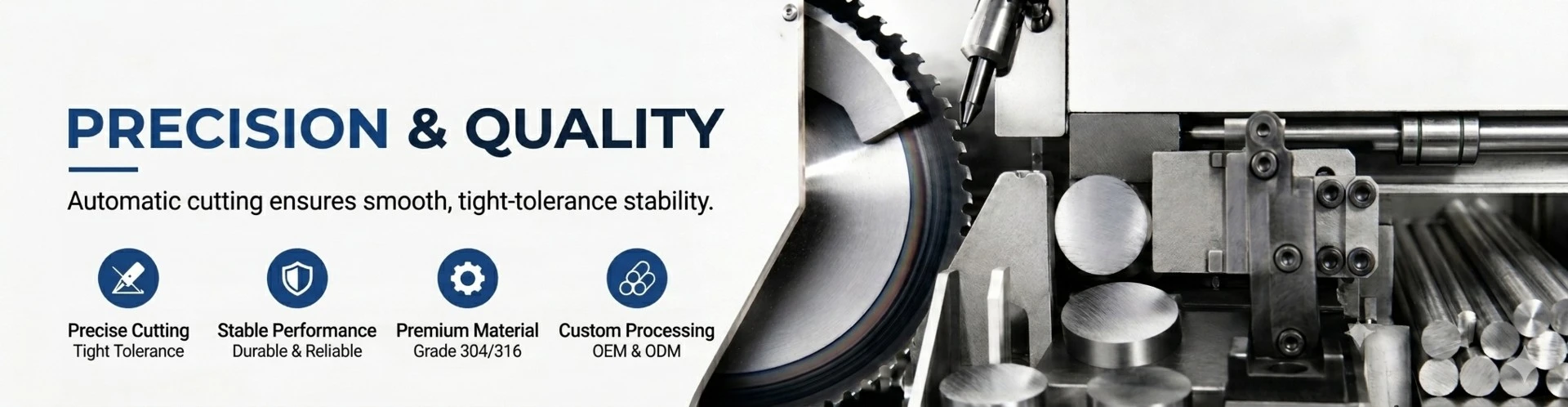
High-speed steel saw blades are saw blades made from alloy steel containing a large amount of elements such as carbon (C), tungsten (W), molybdenum (Mo), chromium (Cr), and vanadium (V). After heat treatment, these saw blades possess high hot hardness, allowing them to maintain their hardness and cutting performance at high temperatures. Here are some key characteristics and applications of high-speed steel saw blades:
High Hardness and Wear Resistance: High-speed steel saw blades have extremely high hardness, allowing them to remain sharp for extended periods during cutting, making them suitable for cutting various metal materials.
Hot Hardness: High-speed steel saw blades maintain their hardness even at high temperatures; their hardness does not significantly decrease even when the cutting temperature reaches above 600°C.
Wide Range of Applications: High-speed steel saw blades are suitable for various machining equipment, such as pipe cutting machines, metal circular saws, pipe cutting machines, pipe processing machinery, sawing machines, milling machines, etc. They can be used to cut medium-hard metals such as steel, iron, copper, and aluminum.
Efficient Cutting: Due to their high hardness and wear resistance, high-speed steel saw blades enable efficient cutting, improving production efficiency and reducing cutting costs.
Multiple Specifications: High-speed steel saw blades are available in various specifications and thicknesses to suit different cutting needs. For example, diameters range from 30 mm to 200 mm, and thicknesses range from 0.2 mm to 5 mm.
Special Treatment: Some high-speed steel saw blades undergo special coating treatment, resulting in a surface hardness of approximately 2400 HV and a friction coefficient reduced to 0.55, making them suitable for high-speed sawing of seamless steel pipes, iron pipes, and bars.
Maintenance and Use: To ensure the best performance of high-speed steel saw blades, it is necessary to use them strictly according to specifications, including correct installation, regular sharpening, and avoiding collisions.