

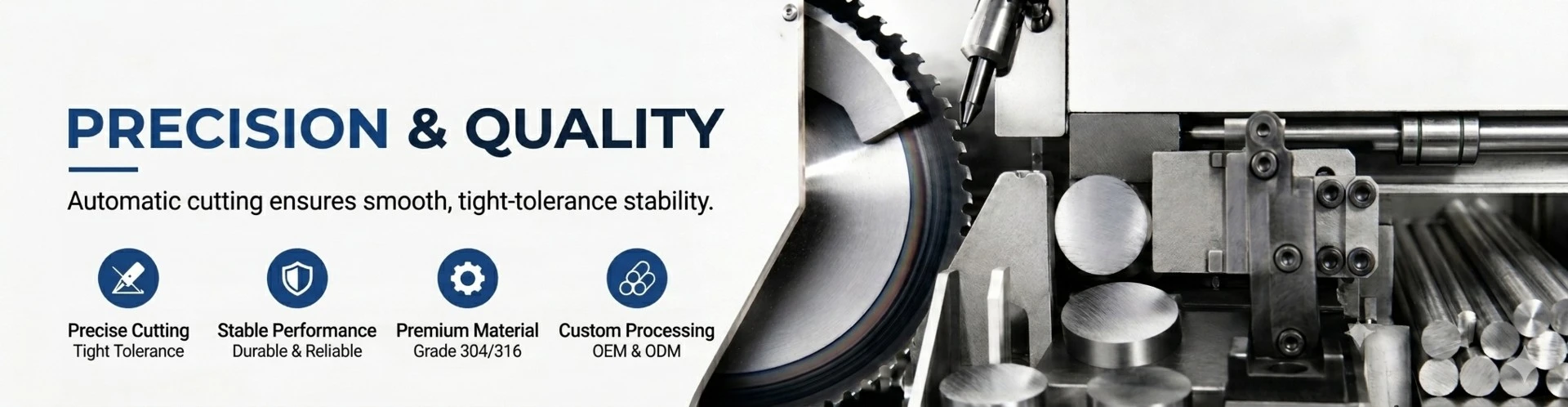
Proper maintenance of high-speed steel saw blades is crucial for ensuring their long-term stable operation and efficient cutting. The following details the maintenance methods from several perspectives:
Pre-Use Inspection
Before using a high-speed steel saw blade, a thorough inspection is essential. First, check the blade surface for cracks, chips, or uneven wear, as these defects can seriously affect the cutting performance and safety of the blade. Second, ensure the blade is securely mounted and not loose, and check for proper concentricity to prevent wobbling or deviation during high-speed rotation, which could affect cutting accuracy.
Correct Use and Adjustment
Adjust the saw blade speed and feed rate appropriately according to different cutting materials and process requirements. Excessively high speeds can cause the blade to overheat and accelerate wear; while excessively low speeds may affect cutting efficiency. Avoid overloading the saw blade to prevent excessive heat and pressure during cutting, which could damage the blade. In addition, select the appropriate blade type and number of teeth based on the hardness and thickness of the material.
Cleaning and Lubrication
After use, promptly clean the saw blade to remove chips and oil stains. Use a specialized cleaning agent and a soft brush for cleaning, avoiding the use of hard objects to scratch the blade surface to prevent damage. Regularly lubricate the saw blade to reduce friction and wear, extending its service life. When lubricating, use a lubricant suitable for high-speed steel and apply it evenly to the blade surface.
Storage Environment and Management
Saw blades should be stored in a dry, well-ventilated environment to prevent moisture and rust. Prolonged exposure to humid environments can lead to oxidation of the blade surface, affecting cutting performance. When storing, the saw blades should be hung or placed flat on a dedicated tool rack to prevent deformation due to compression. Regularly inspect stored saw blades to ensure they are in good condition.
Regular Inspection and Replacement
In addition to daily maintenance, a comprehensive inspection of high-speed steel saw blades should be performed regularly. Check the wear of the saw blade, changes in tooth shape, etc., to promptly identify and address potential problems. When the saw blade is severely worn or cannot be repaired, it should be replaced promptly to