

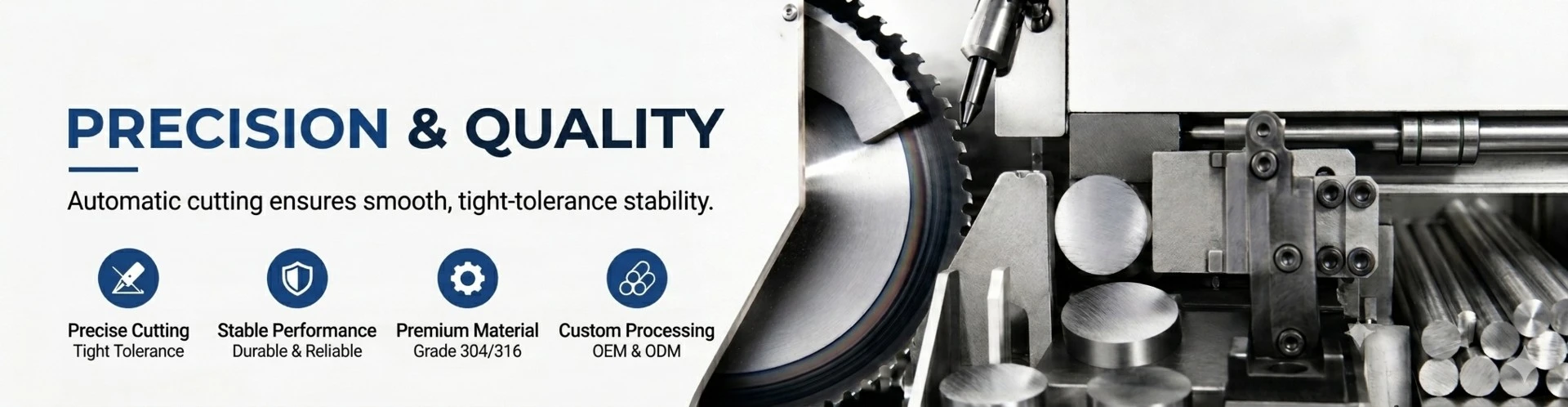

Many metal fabricators face confusion when selecting bi‑metal band saw blades for high strength alloy steel. Simply picking higher grade blades cannot always bring ideal cutting results. Actual workpiece material, cross section size and machine condition together determine the final cutting performance.
When cutting alloy steel bars and forged blanks, tooth pitch selection deserves extra attention. Too few teeth engaged in the cut will cause tooth fracture; too many teeth stuck inside the workpiece leads to chip jamming and sharp temperature rise. Operators should avoid relying only on experience, and adjust tooth specification according to real‑time cutting noise and chip shape.
Blade tension and guide block condition are often ignored on site. Loose tension will create blade wandering and crooked cuts. Worn guide blocks will damage blade back edges and shorten service life greatly. Regular inspection and adjustment help keep stable cutting quality.
M42 bi‑metal band saw blades work well for general alloy steel processing. For high hardness alloy workpieces, M51 grade delivers better wear resistance under heavy load cutting. Matching blade grade with your actual material, rather than blindly pursuing top level products, helps factories lower comprehensive processing cost and improve overall production efficiency.

