

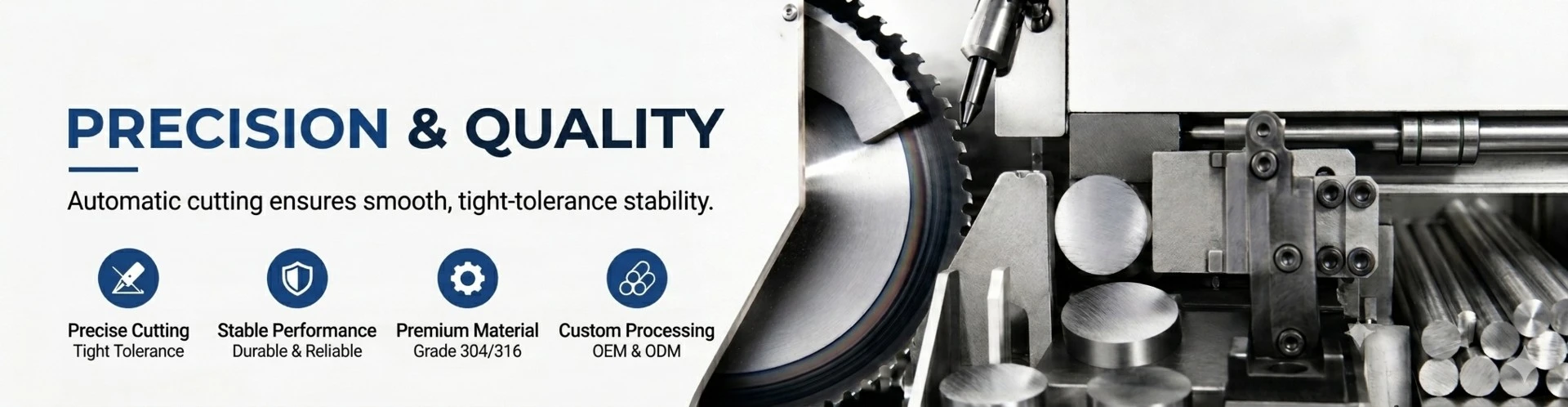
The cutting principle of bi-metal bandsaw blades lies in the synergistic effect of their unique bi-metal composite structure and the sawing motion. This type of saw blade is precisely composed of two different metal materials: the teeth are typically made of high-speed steel, a material known for its high hardness and excellent wear resistance, allowing it to easily cut into various metal materials; the back is made of spring steel, which provides the necessary toughness and fatigue resistance, ensuring that the saw blade does not break easily during long-term, high-load cutting operations.
During cutting operations, the bi-metal bandsaw blade is mounted on a bandsaw machine and driven by the saw wheels, resulting in continuous circular motion. When the saw blade contacts the workpiece, the high-speed steel teeth immediately come into play, using their high hardness to cut into the workpiece surface. As the saw blade continues to move, the saw teeth continuously cut the material, peeling it away from the workpiece body and forming chips. In this process, the spring steel on the back plays a crucial supporting role, bearing the enormous tensile and impact forces generated during cutting, ensuring the stability and durability of the saw blade.
To achieve efficient and stable cutting results, precise control of parameters such as cutting speed, feed rate, and saw blade tension is crucial. Too fast a cutting speed may lead to overheating or increased wear of the saw blade, while too slow a speed will affect production efficiency; too large a feed rate may cause the saw blade to jam or break, while too small a feed rate will lead to low cutting efficiency; improper adjustment of saw blade tension will also affect cutting accuracy and saw blade life. Therefore, in practical operation, these parameters need to be adjusted appropriately according to the workpiece material, thickness, and cutting requirements to achieve the best cutting results.
In addition, the design of bi-metal bandsaw blades also considers heat dissipation and chip removal. The tooth shape and chip removal groove design help to quickly dissipate the heat generated during the cutting process, while ensuring that chips are smoothly removed, preventing the saw blade from jamming and affecting cutting quality. These detailed designs further enhance the cutting performance and applicability of bi-metal bandsaw blades.