

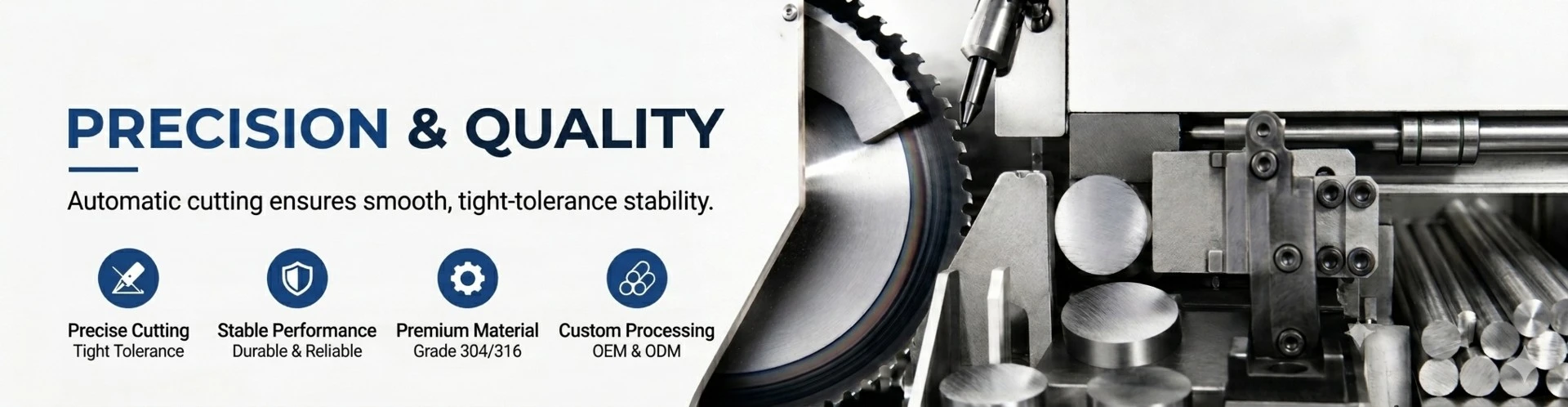
Circular saw blades, as a common cutting tool, are widely used in the processing of materials such as wood and metal. So, how are circular saw blades manufactured? Below, we will provide a detailed explanation of their manufacturing principles.
Material Selection
The manufacturing of circular saw blades begins with material selection. Manufacturers typically choose suitable steel based on the intended use of the saw blade and the properties of the material to be cut. For example, saw blades for cutting hard materials will use high-strength, high-wear-resistant steel; while saw blades for cutting soft materials may prioritize material toughness and ease of processing.
Manufacturing Process
1. Steel Cutting: After selecting the material, the steel is first cut into appropriate sizes for further processing.
2. Heat Treatment: Next, the steel undergoes a heat treatment process, including quenching and tempering. These treatments enhance the hardness and toughness of the steel, increasing the service life of the saw blade.
3. Precision Machining: After heat treatment, the steel is precisely machined into the shape of a circular saw blade. This process involves various techniques such as turning and grinding to ensure the dimensional accuracy and surface quality of the saw blade.
4. Tooth Profile Machining: The tooth profile of a circular saw blade is crucial to its cutting performance. Therefore, manufacturers use specialized machine tools and cutting tools to machine the appropriate tooth profile according to the saw blade's intended use and design requirements.
5. Surface Treatment: Finally, to improve the corrosion resistance and aesthetics of the saw blade, manufacturers perform surface treatments such as galvanizing and painting.
Design Considerations
Design is also a very important aspect in the manufacturing process of circular saw blades. Designers need to consider multiple factors, including cutting efficiency, service life, safety, and manufacturing costs, to develop the optimal design. For example, optimizing the tooth profile design can improve the cutting speed and quality of the saw blade; while choosing appropriate materials and heat treatment processes can ensure that the saw blade has sufficient strength and wear resistance.