

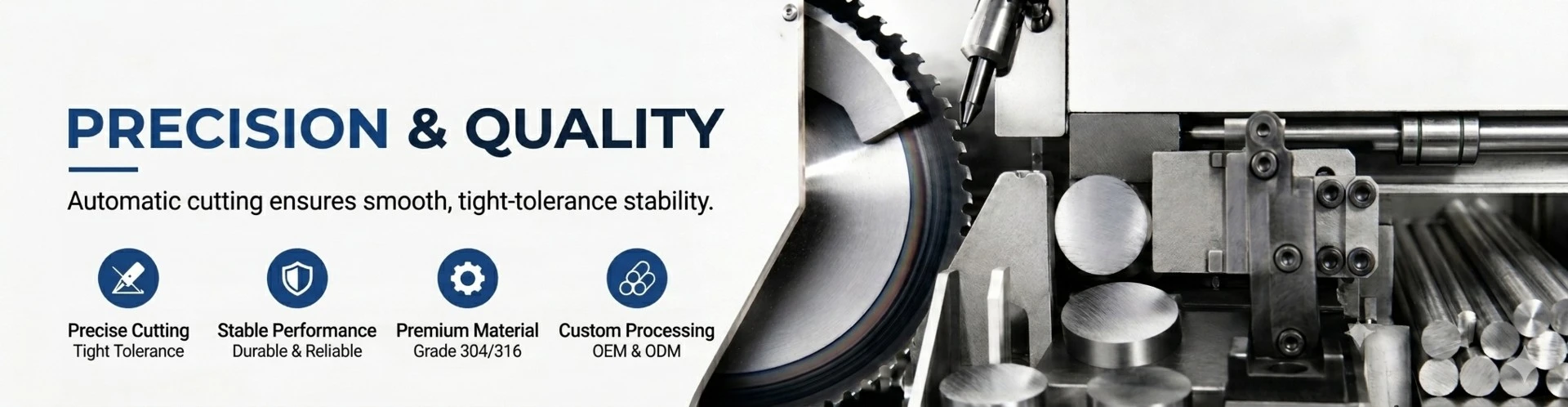

Saw tooth geometry forms the foundation of stable metal cutting, where rake angle and clearance angle jointly govern chip formation, tooth strength and overall service life. Most factory set tooth angles are not random values, but final outputs refined from years of field trials and real world workshop feedback. Manufacturers tune these parameters according to blade dimension, workpiece diameter and material hardness instead of applying one universal angle for all sizes.
For instance, blades built for 750 mm diameter workpieces commonly adopt a 10 degree rake angle paired with an 8 degree clearance angle. Many end users assume a larger positive rake angle will automatically boost cutting speed, yet practical experience tells a different story. Adjusting the rake angle arbitrarily does not guarantee higher cutting efficiency. It may even weaken tooth tip strength, trigger premature chipping or abnormal vibration, without bringing expected productivity gains.
Without side by side comparative testing under your exact working conditions, it is hard to quantify whether angle modification brings tangible benefits. For most standard metal cutting scenarios, sticking to the original factory optimized tooth profile remains the most reliable choice. When facing tricky cutting challenges, priority should go to adjusting feed rate, cutting speed or tooth pitch before considering any tooth angle alteration.

