

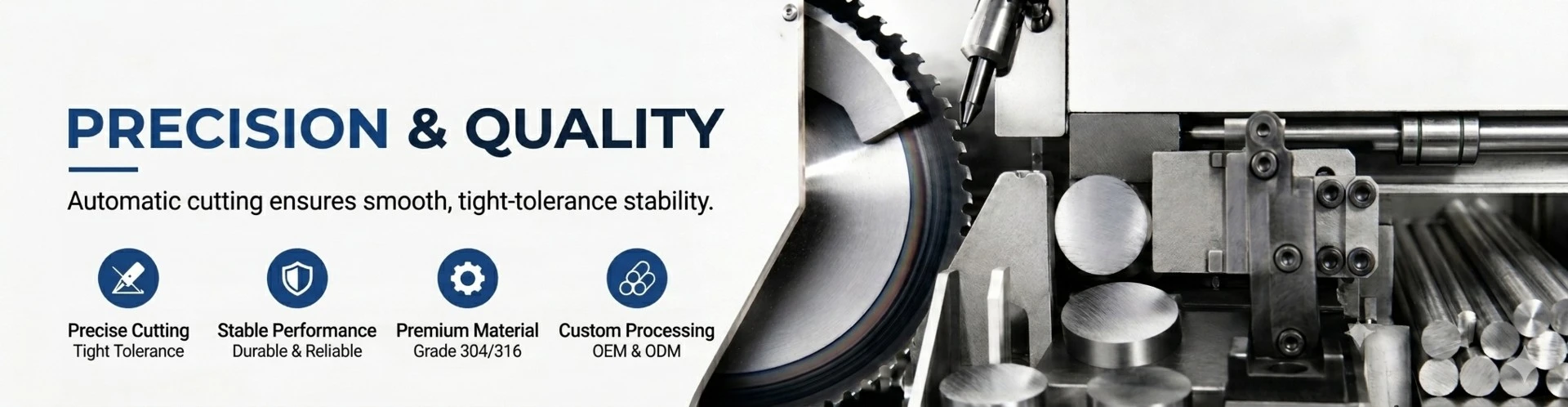

Bimetallic band saw blades stand as one of the most widely used cutting tools in modern metal fabrication, favoured for their balanced toughness, wear resistance and cost efficiency across a broad range of metal processing applications. Unlike all-high-speed-steel saw blades, a bimetallic band saw blade adopts a composite welded structure: the tooth tip is made of high hardness high-speed steel, while the blade body uses flexible spring alloy steel. This material combination solves the long-standing conflict between cutting hardness and fracture resistance, enabling the blade to tackle both solid alloy steel bars and thick steel profiles without easy tooth chipping or blade breakage.


The welding quality between tooth strip and blade substrate directly determines the service life of the saw blade. Electron beam welding is the mainstream manufacturing process for premium bimetallic saw blades. The welding seam must be uniform and free of tiny cracks, otherwise the blade may snap under continuous cutting vibration. After welding, the blades go through multiple heat treatment procedures to stabilise internal material stress. Unstable heat treatment will lead to premature tooth fatigue and uneven wear during long time cutting.
Tooth pitch selection is another critical factor affecting cutting performance. Coarse pitches are suitable for large cross-section solid workpieces, offering bigger chip space to avoid chip clogging. Fine pitches are applied to thin walled pipes and sheet metal, ensuring at least two teeth stay engaged with the workpiece at all times to prevent tooth snapping. Many operators make the mistake of choosing only by material type while ignoring workpiece thickness, which is the main cause of frequent blade damage.
Proper running in is essential when installing a new bimetallic band saw blade. The first 15 to 30 minutes of cutting should use reduced feed rate and cutting speed. This procedure gently polishes the tooth edge and creates a stable cutting surface. Skipping running-in will lead to rapid tooth abrasion and drastically shorten blade life.
Even top quality bimetallic saw blades require regular maintenance. Keeping the right cutting fluid can lower cutting temperature, wash away metal chips and reduce friction. Operators also need to check band tension regularly. Over-tension causes sudden blade breakage, while insufficient tension brings about cutting deviation and early tooth wear.
As metal processing industries continuously upgrade raw materials, bimetallic saw blade manufacturers keep optimising alloy formulations and tooth geometry. Selecting matching saw blades and following correct operating rules helps metal processing factories cut down tool consumption and improve overall machining efficiency.