

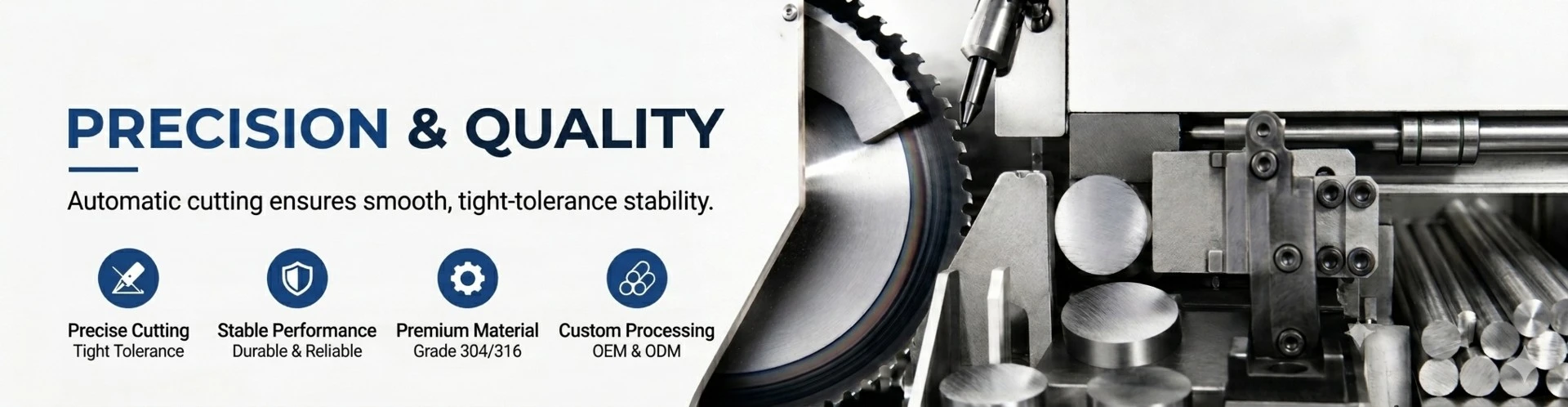

Many metal processing workshops encounter frequent blade chipping, early breakage and short service life, even when purchasing well known bi‑metal band saw blades. Most of these failures do not stem purely from blade quality, but come from mismatched tooth pitch, improper machine adjustment or poor cooling conditions on site.
For solid alloy bars, stainless steel billets and thick wall steel tubes, operators often select too coarse teeth, which causes tooth overload and chipping. Conversely, over fine tooth pitch leads to chip clogging, sharp heat build up and accelerated tooth wear. It is necessary to match tooth pitch according to actual workpiece cross section rather than only following general purpose parameters.
Machine maintenance also plays a key role. Worn guide blocks, unstable band tension and insufficient coolant flow will greatly shorten blade life. Coolant not only cools cutting zones, but also washes away metal chips; poor chip removal easily scratches tooth edges and workpiece surfaces.
M42 and M51 bi‑metal band saw blades perform steadily for most carbon steel, alloy steel and stainless steel cutting .
Reasonable tooth selection, correct tension setting and regular guide block inspection can effectively lower blade consumption and improve cutting stability. Factories can cut comprehensive production costs without blindly upgrading high grade blades.

