

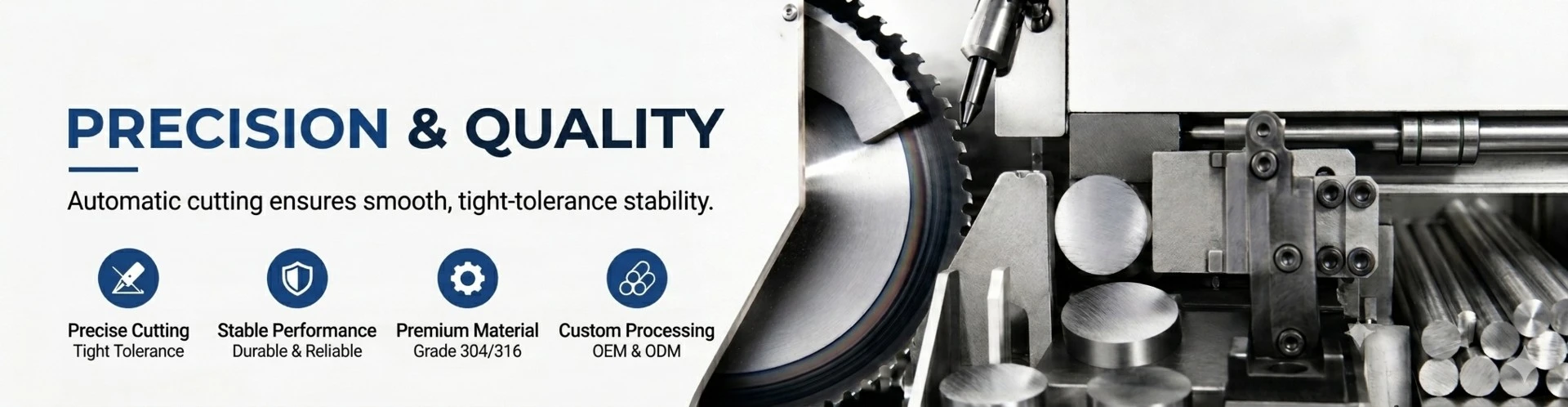

In modern metalworking, cutting is one of the first steps that directly affects production efficiency, material utilization, and the quality of finished parts. As manufacturers face increasing pressure to reduce production costs and improve output, choosing the right metal cutting saw blade has become increasingly important.
Different metals require different cutting solutions. Steel, stainless steel, alloy steel, tool steel, and other difficult-to-cut materials can vary significantly in hardness, structure, and cutting behavior. Using a blade that is not suitable for the material may result in short blade life, unstable cutting, excessive vibration, or poor surface quality.
For many general metal cutting applications, M42 bi-metal band saw blades remain a practical choice. With a high-speed steel cutting edge combined with a flexible alloy steel backing, M42 blades offer a good balance between wear resistance and fatigue resistance. They are widely used for cutting carbon steel, structural steel, stainless steel, and other common metal materials.
For more demanding applications, M51 bi-metal band saw blades can provide additional cutting performance. The higher alloy content of the cutting edge makes M51 blades suitable for harder and more difficult materials. They are often considered for applications where longer blade life and higher wear resistance are important.
Circular saw blades are another important solution in industrial metal cutting. HSS circular saw blades are widely used for cutting tubes, profiles, bars, sheets, and other metal components. Depending on the material and machine conditions, different HSS grades and coatings can be selected to improve wear resistance and cutting performance.
For high-volume production lines, manufacturers may also choose metal cutting circular saw blades with carbide or cermet tips. These blades are designed for demanding production environments where cutting speed, consistency, and long service life are important factors.
Blade selection should not be based on material alone. Machine power, cutting speed, feed rate, workpiece dimensions, tooth pitch, blade tension, coolant conditions, and the stability of the machine can all influence cutting results. Selecting the correct tooth pitch is particularly important when cutting different material sizes. A suitable tooth configuration can help reduce vibration, improve chip removal, and extend blade life.
Another important factor is production stability. A blade with a low purchase price does not necessarily provide the lowest cutting cost. If the blade requires frequent replacement or produces inconsistent cuts, the total production cost may increase. For this reason, many industrial users evaluate saw blades according to cost per cut, cutting capacity, service life, and overall production efficiency.
As a professional saw blade manufacturer, JINZHI focuses on providing cutting solutions for different industrial applications. The product range includes M42 and M51 bi-metal band saw blades, HSS circular saw blades, TCT circular saw blades, cermet-tipped saw blades, and other industrial cutting products.
With appropriate material selection, tooth design, heat treatment, and quality control, the right saw blade can help manufacturers achieve more stable cutting performance and better production efficiency.
For metalworking companies looking to improve their cutting process, selecting the right blade is not simply a purchasing decision. It is an important part of the overall production strategy.
Source & Reference
Source: JINZHI Steel Co., Ltd.
Product Reference: HSS M42 TiN-Coated Flying Saw Blades; TCT Cold Saw Blades
Application: Steel Pipe and Tube Cutting
Performance Data: Based on practical application and production-line testing.