

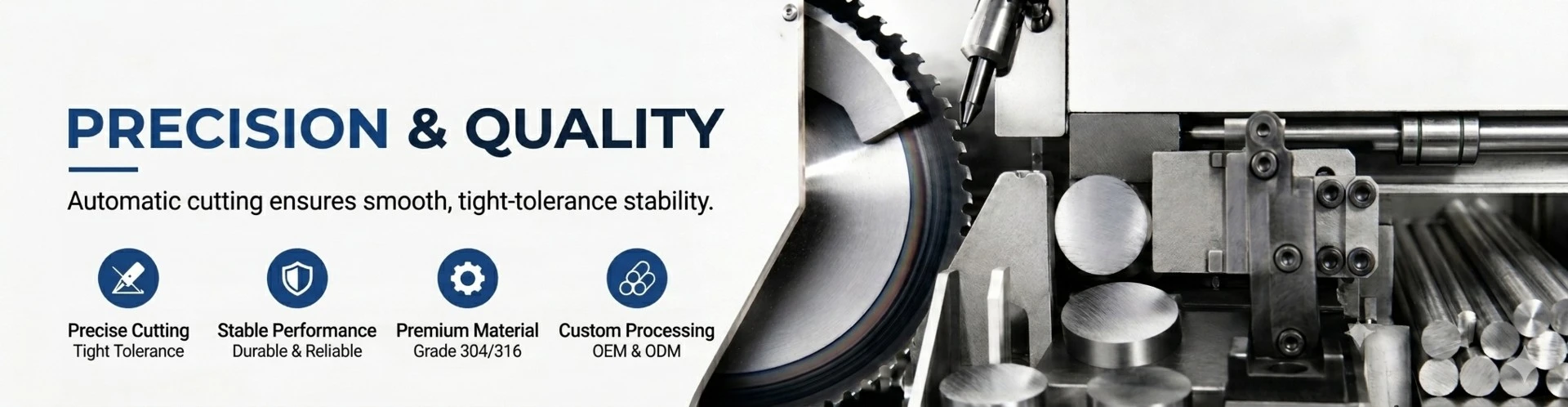
The core principle of high-speed steel saw blade cutting lies in the application of shear force by its sharp cutting edges at high speed, causing the material to deform, fracture, and separate, thus achieving efficient cutting.
Having understood the core principle, let's look at how it is implemented step by step:
1. Shearing Action of the Cutting Edge
The edge of the high-speed steel saw blade is covered with hard cutting teeth, each acting like a miniature chisel. When the saw blade rotates or reciprocates at high speed, these cutting teeth instantly "bite" into the material, applying immense shear force, causing the material to undergo plastic deformation until it fractures.
2. Material Separation and Chip Removal
After the cutting teeth cut into the material, they peel off a portion of it from the parent body, forming chips. The continuous movement of the saw blade and the specific tooth design ensure that these chips are effectively ejected from the cutting area, preventing clogging and ensuring a continuous and stable cutting process.
3. Efficiency Enhancement through High-Speed Movement
"High speed" is the key. Extremely high linear speed means that more cutting teeth are involved in the work per unit time, subjecting the material to high-frequency impacts and cutting, which greatly improves cutting efficiency and helps to obtain a smoother cut surface.
4. Precise Coordination of Pressure and Feed Rate
Perfect cutting requires precise operation. Applying appropriate downward pressure ensures that the cutting teeth effectively penetrate the material; controlling a stable feed rate avoids slippage and wear caused by insufficient thrust, or overheating, tooth breakage, or even workpiece damage caused by excessive thrust. The coordination of these two factors is a crucial guarantee for achieving high-quality cutting.