

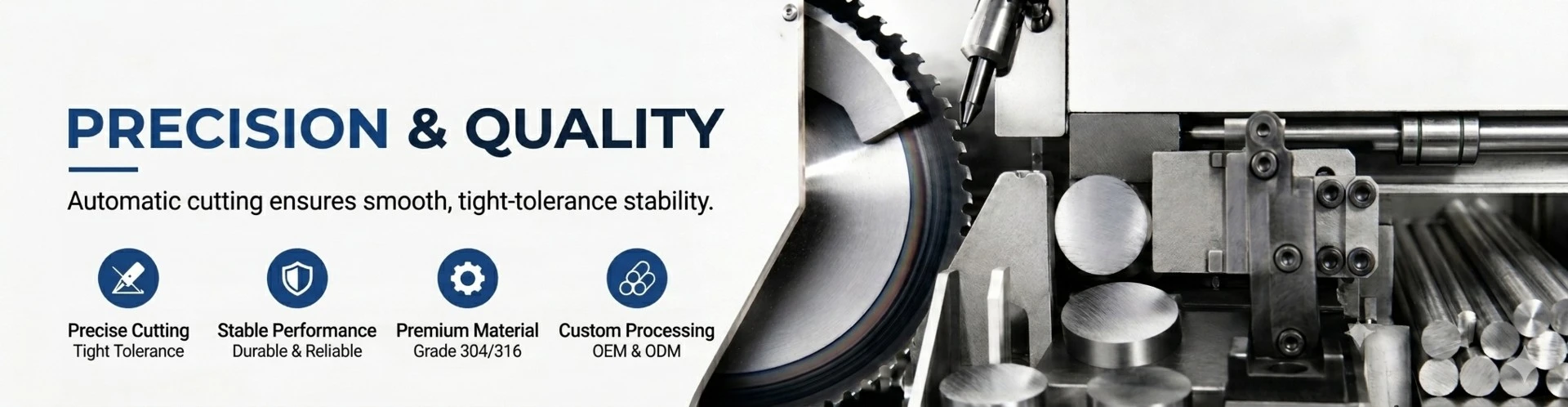
If the saw blade is not to be used immediately, it should be laid flat or suspended by its inner hole. Other objects should not be placed on top of a flat-lying saw blade, nor should it be stepped on. It should also be protected from moisture and corrosion.
When the saw blade is no longer sharp and the cutting surface is rough, it must be reground promptly. Regrinding should not alter the original angle or disrupt the dynamic balance.
Modifications to the inner diameter of the saw blade and processing of positioning holes must be performed by the manufacturer. Poor processing will affect the product's performance and may cause danger. The hole diameter should not be enlarged by more than 20mm from the original diameter to avoid affecting stress balance.
Selection of Alloy Grinding Wheels:
1) Resin-bonded diamond grinding wheels have weak bonding strength, therefore they have good self-sharpening properties, are less prone to clogging, have high grinding efficiency, low grinding force, and low grinding temperature. However, their wear resistance is poor, and tool wear is high, making them unsuitable for heavy-duty grinding.
2) Ceramic-bonded diamond grinding wheels have better wear resistance and bonding ability than resin-bonded ones. They offer sharp cutting, high grinding efficiency, are less prone to overheating and clogging, have low thermal expansion, and allow for easy precision control. However, the grinding surface is rougher, and the cost is higher.
3) Metal-bonded diamond grinding wheels have high bonding strength, good wear resistance, low wear, long lifespan, and low grinding cost. They can withstand larger loads, but their sharpness is poor, and they are prone to clogging.
4) Abrasive grain size has a certain impact on grinding wheel clogging and cutting volume. Compared to fine grains, coarse grains have a larger penetration depth, increasing abrasive cutting edge wear. Conversely, the grinding wheel is more prone to clogging.
5) Grinding wheel hardness has a significant impact on clogging. High-hardness grinding wheels have a high thermal conductivity, which is not conducive to surface heat dissipation, but it helps improve processing accuracy and durability.
6) Grinding wheel concentration selection is an important characteristic, significantly affecting grinding efficiency and processing costs. Too low a concentration affects efficiency, while too high a concentration leads to easy shedding of abrasive grains. However, there is an optimal range for the binder concentration.