


The global metalworking sector faces growing challenges when machining high performance workpieces, including nickel-based superalloys, titanium alloys and hardened tool steel. These materials feature strong work hardening tendencies, high thermal resistance and abrasive properties, which can quickly wear standard saw teeth, shorten blade service life and increase unplanned downtime. JINZHI Steel, a professional supplier of premium bandsaw blades, releases practical technical guidance to help fabricators pick suitable sawing tools and optimise cutting processes.


Many workshops still rely on bi metal blades for all cutting jobs, which often leads to disappointing results on difficult to cut metals. M51 bi metal bandsaw blades are an excellent cost effective option for alloy steel, stainless steel and medium strength ferrous materials. Built with flexible spring steel backing and cobalt high speed steel teeth, M51 delivers reliable red hardness and good impact resistance. It handles continuous cutting of solid bars and profiles efficiently for general metal fabrication, oil & gas components and machinery part production. However, when workpiece hardness exceeds 45 HRC or when cutting superalloys with heavy abrasive behaviour, M51 bi metal reaches its performance limit. Tooth chipping, rapid flank wear and poor surface finish become common problems.
For such demanding applications, TCT carbide tipped bandsaw blades are the preferred solution. TCT blades feature tungsten carbide tips brazed firmly onto the steel blade body. Carbide teeth maintain hardness at extremely high cutting temperatures and resist abrasion far better than high speed steel. They are engineered for long run heavy cutting of large-diameter hardened billets, Inconel, Hastelloy and titanium workpieces. Although the upfront purchase price of TCT blades is higher, the extended service life and fewer blade changeouts reduce overall production cost for mass processing of exotic alloys.
Technical support teams at JINZHI Steel observe one frequent mistake in customer RFQs: complete blade dimensions are provided, yet TPI (teeth per inch) is omitted. Blade size such as 7250 × 41 × 1.3 defines length, width and thickness, but tooth pitch controls chip removal, vibration and cutting stability. The golden rule of sawing: at least two teeth must stay engaged with the workpiece during every cut. Large solid billets require coarse variable pitch like 1.4/2 or 2/3 TPI to create sufficient gullet space for chip evacuation and prevent chip packing. Medium size alloy bars use 3/4 TPI, while smaller rods and thick-wall tubes call for denser 4/6 or 5/8 TPI. Variable pitch tooth profiles reduce resonant vibration, lower cutting noise and avoid premature tooth breakage compared to fixed pitch teeth.
Blade width and machine setup also matter greatly. Wider 41 mm blades offer superior rigidity and cutting straightness for heavy straight cuts. Operators must calibrate blade tension, adjust cutting speed and feed rate, and apply proper cutting fluid. Insufficient cooling softens cutting edges, while excessive feed force overloads teeth. Even top tier M51 or TCT blades will fail prematurely if machine parameters are mismatched.
Workshop shipment
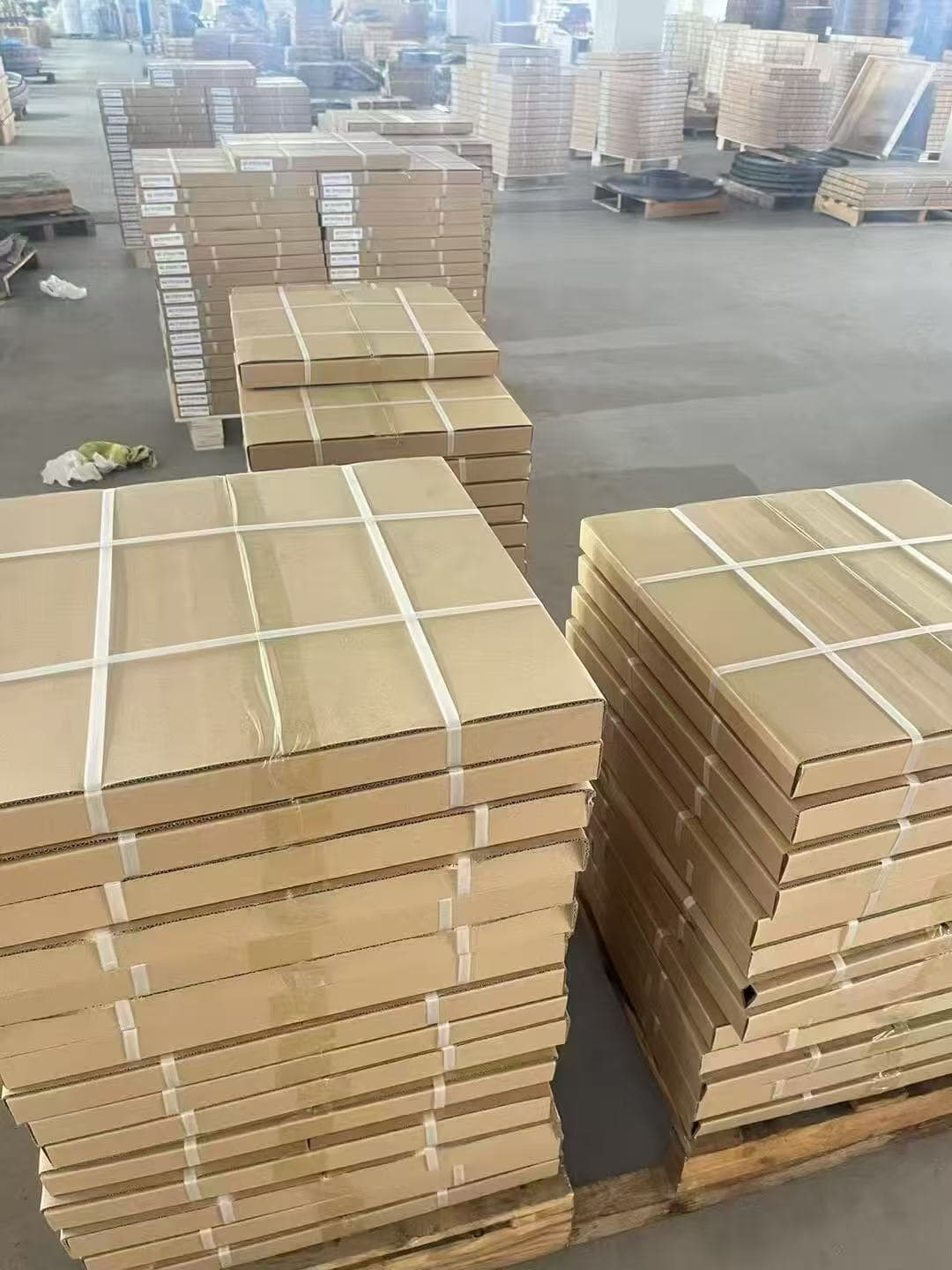
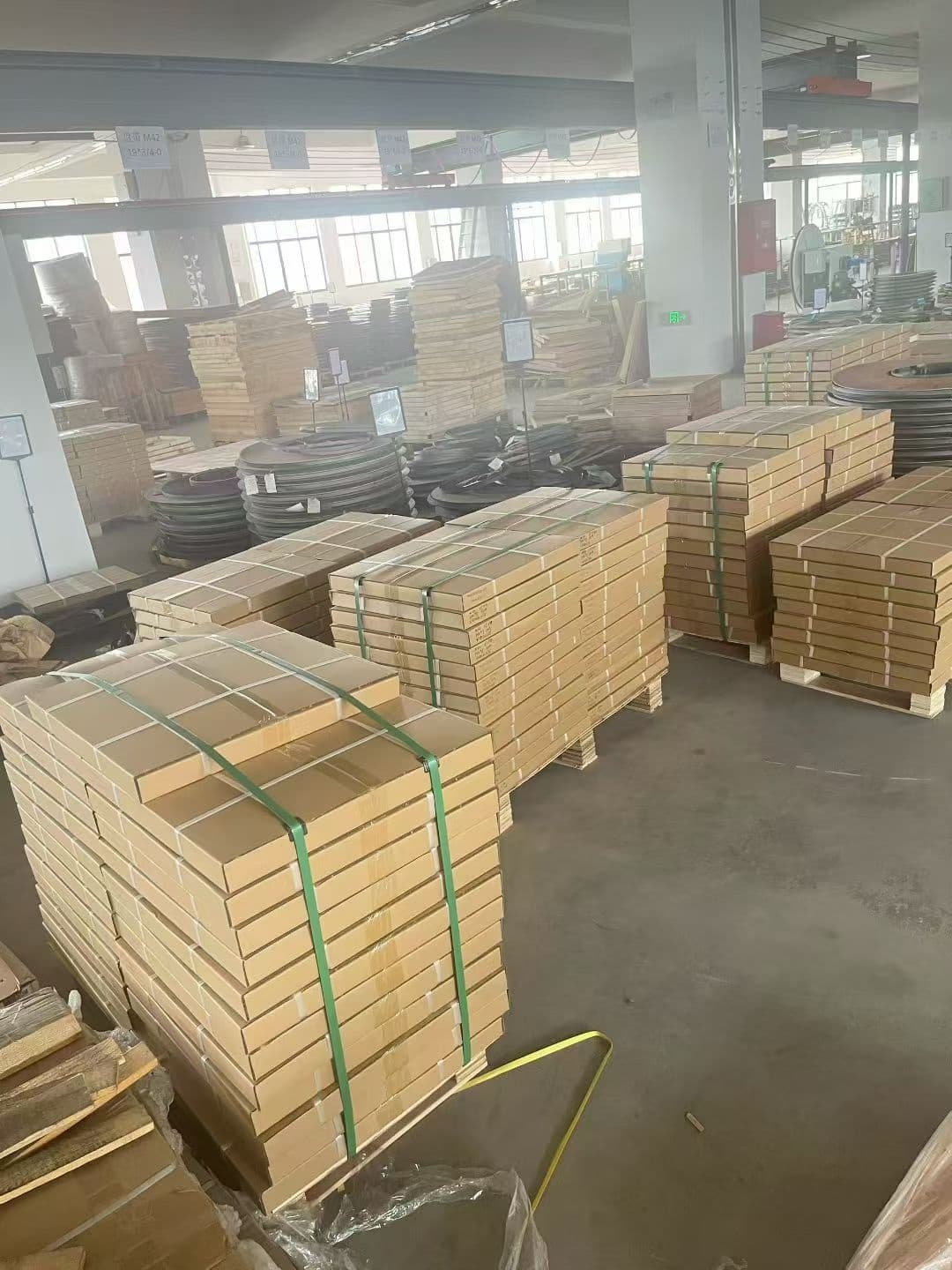
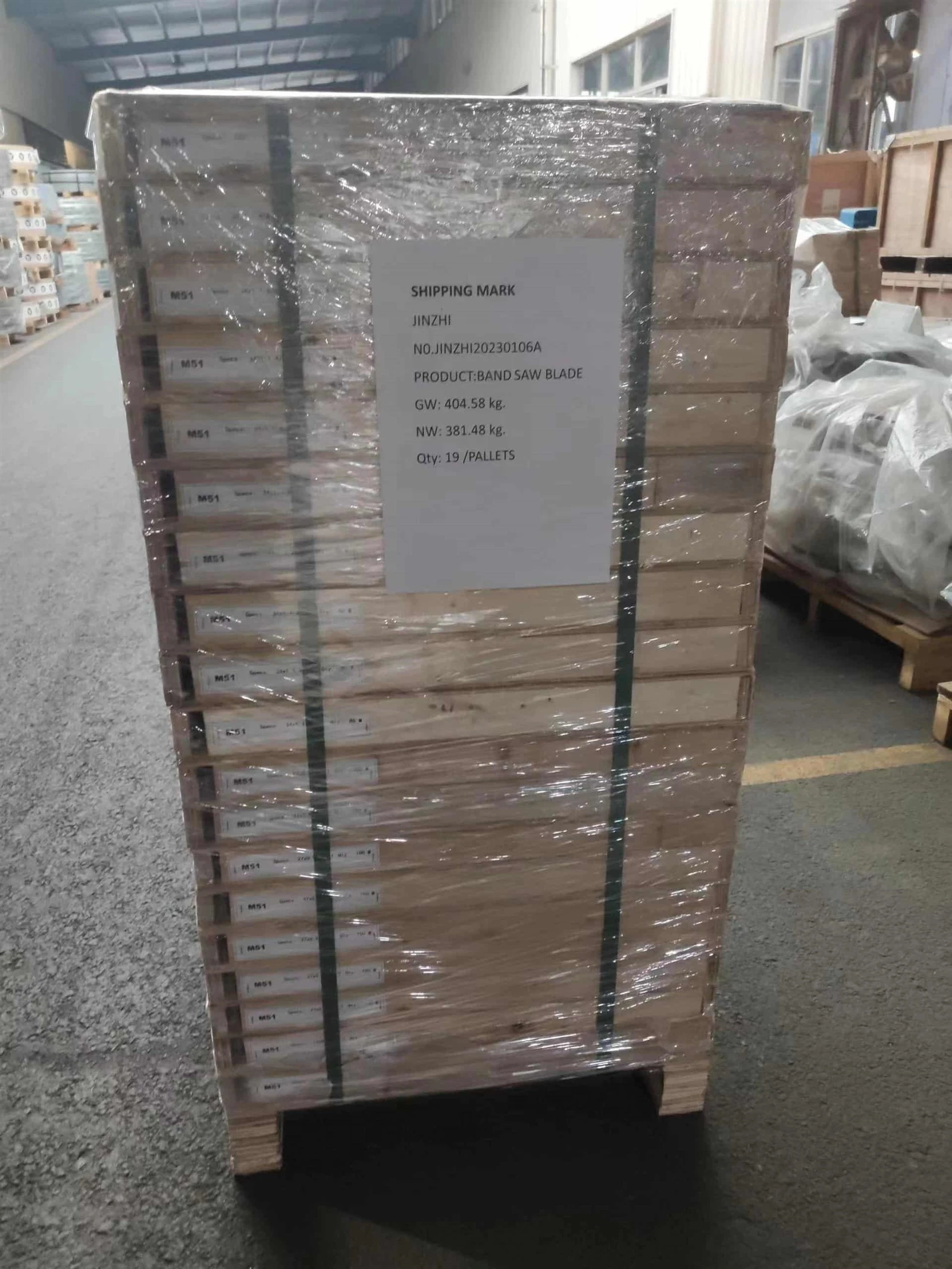
JINZHI Steel supplies bi metal M51, Arntz Blizzard, Starrett MC7 and Calibra TCT bandsaw blades to metal fabricators across Asia, the Middle East, Europe and Latin America. The company's technical team provides free cutting consultation, helping customers match blade grade, TPI and operating parameters according to workpiece material, section size and production volume.
With rising raw material and labour costs, manufacturers are shifting focus from cheap consumables to total machining cost control. Selecting the right bandsaw blade is not just a purchasing decision; it is a core part of production optimisation. JINZHI Steel continues to share field proven sawing knowledge and reliable cutting tools, helping global clients boost cutting accuracy, extend blade life and minimise workshop downtime.