

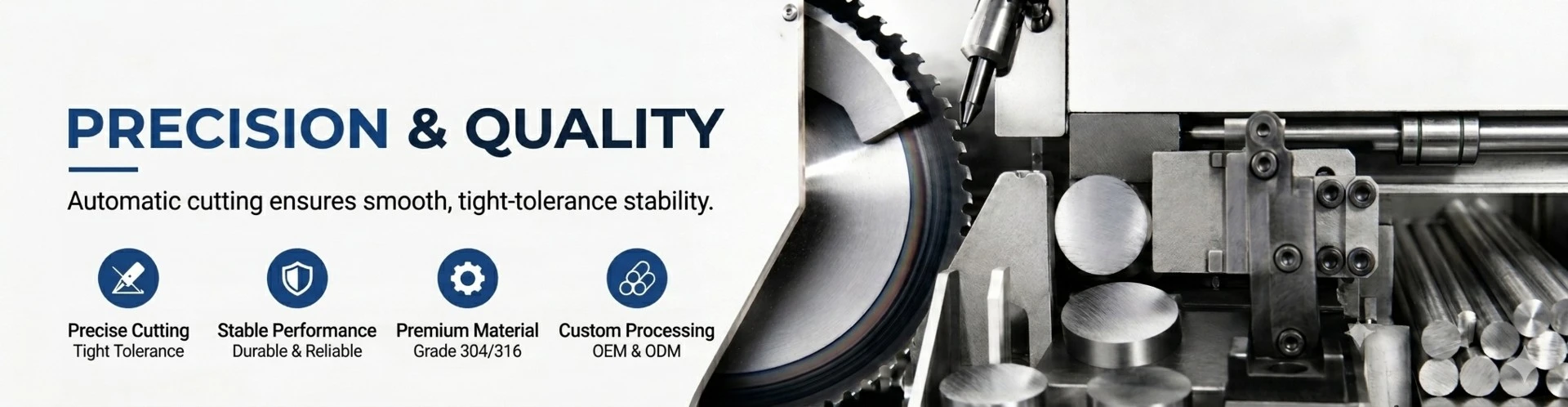
The number of teeth on a circular saw blade significantly affects cutting performance, mainly in the following aspects:
- **Cutting Speed:** Saw blades with fewer teeth have a larger cutting load per tooth, resulting in a relatively faster cutting speed, suitable for rough machining where high surface quality is not required. Saw blades with more teeth have a smaller cutting load per tooth, resulting in a slower cutting speed, but the cutting process is smoother.
- **Cutting Surface Quality:** Fewer teeth result in a relatively rougher cutting surface with more noticeable saw marks; more teeth result in a smoother and flatter cutting surface, suitable for fine machining where high surface quality is required.
- **Cutting Accuracy:** Saw blades with more teeth, due to the smaller cutting load per tooth, exert less lateral force on the material during cutting, better ensuring cutting accuracy and reducing cutting errors. Saw blades with fewer teeth have relatively lower cutting accuracy.
- **Blade Lifespan:** Saw blades with more teeth experience less wear per tooth, which can extend the lifespan of the saw blade to some extent.